
The Afghan weed strain, commonly known as Afghani, is a traditional landrace indica that originated from the Hindu Kush mountains of Afghanistan. It is best known for its deeply relaxing effects and high resin production.
As one of the oldest indica cultivars, Afghani has played a crucial role in cannabis history. Its genetics form the foundation of many modern indica and hybrid strains, keeping its legacy alive even in today’s cannabis culture.
Origins & History of Afghan Cannabis
Afghan cannabis is primarily recognised as a landrace, which is a naturally occurring strain that developed over centuries without modern crossbreeding. These traits were not developed through human interference but rather through the selection of the best plants for local conditions.
The harsh weather conditions of the Hindu Kush in Afghanistan, consisting of high altitude, very cold nights, heavy sunlight, and dry air, were conducive to the growth of short, fast-maturing plants with bulky buds and great resin production, which are the traits now linked with indica varieties.
For hundreds of years, the people of the Hindu Kush region have been growing cannabis mainly for the production of traditional hashish by using different methods like hand rubbing and dry sieving to accumulate the resin. Afghan hash has gained a reputation for being potent and having a rich and earthy flavour.
Over time, travellers and breeders started to spread Afghan genetics to Europe and North America. The landraces served as the basis for modern breeding. They were a major influence in the creation of some famous indica-dominant strains like Northern Lights and Blueberry by shaping the global cannabis market we know today.
Genetics & Strain Classification
Afghani is a pure indica landrace strain originating in the Hindu Kush region, with an almost pure indica dominance. Its stable genetics have produced known phenotypes such as Afghan Kush and Afghani #1, which differ slightly in aroma and growth traits while still producing classic cannabis effects.
The stability and resilience of Afghan have made it an essential element in cannabis crossbreeding, giving many hybrids dense buds, high resin content, and relaxing effects. This stability also allows for predictable results in cannabis cultivation, including short flowering times, a compact plant structure, and a potency that remains constant across generations.
Appearance, Aroma & Flavour Profile
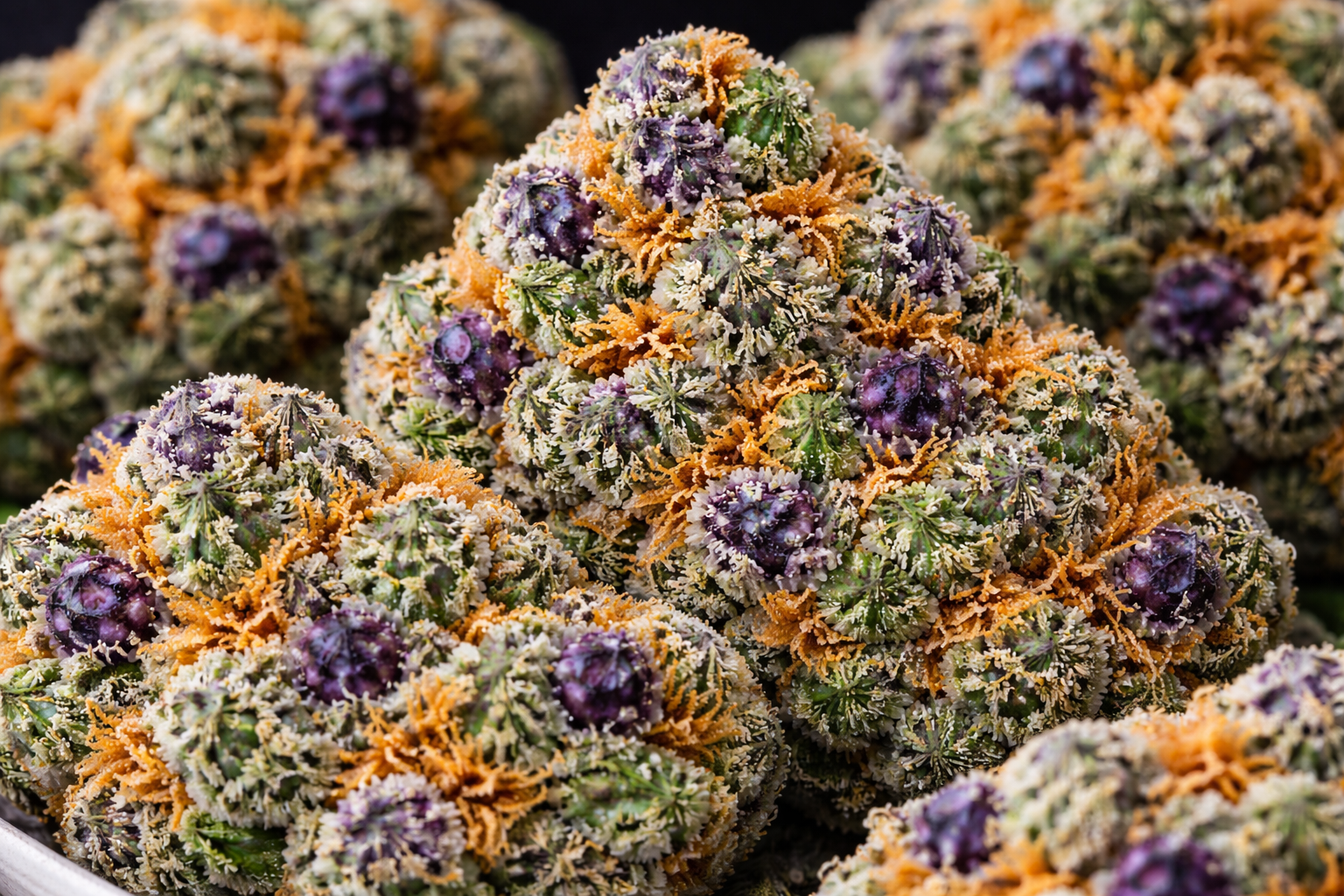
Afghan buds exhibit the standard indica characteristics typical of these plants. They are usually characterised by thickness and compactness which ultimately result in large, very dense flowers with a heavy, sticky resin coating. The buds are predominantly deep green, sometimes with purple hues, particularly when grown at low temperatures.
The bright orange pistils not only signal maturity and strength but also provide colour contrast. The aroma and taste are rich and traditional. The dominant aromas are those of the earth and hash, which are then followed by the layers of the wood and the evergreen scents and, finally, the natural sweetness that comes at the end.
These attributes originate from the specific terpenes present in the plant. Myrcene is the most important terpene contributing to the earthy, musty scent of the flower and the depth of its flavour. Caryophyllene provides a warm, spicy and woody note, while Pinene imparts a fresh pine smell, making the aroma clearer and the taste more complex.
Cannabinoid and Terpene Profile Explained
Afghani cannabis varieties are famous for having a strong but well balanced cannabinoid profile. Usually, the THC content is about 15-20% or even higher, while the CBD content is almost nil, implying that the effects are mostly due to THC. The main terpenes are those that will tell the story of experience and the odour.
Myrcene imparts an earthy, herbal taste and is associated with deep sleep. Caryophyllene contributes a spicy, peppery aroma and may also help relieve stress by interacting with CB2 receptors. The fresh smell of pine is attributed to pinene and is associated with enhanced mental clarity.
The interaction of cannabinoids and terpenes with the body’s endocannabinoid system is responsible for the traditional Afghani strain genes and their worldwide varieties shaping the mood, perception, and overall effects.
Reported Effects & Therapeutic Uses
- Users consistently report feeling relaxed, mentally calm, and slightly euphoric, which greatly facilitates unwinding.
- Reports of sedation together with a strong ”body high” or couch-lock feeling are very common in anecdotal records.
- Many users experience a great reduction of stress and tension during the whole period of the drug’s action.
- User feedback often includes assistance with falling asleep or remaining asleep, particularly during sleep intervals.
- A few users report temporary relief from physical pain or discomfort.
- The effects can vary widely from person to person based on tolerance, environmental factors, and the amount consumed.
- The experienced effects are primarily self-reported and subjective, not clinically verified.
- The clinical evidence for the therapeutic use of cannabis is still limited or developing.
- Experiences of this nature must be separated from the use of evidence-based medical treatments.
Side Effects and Safety Considerations
Using Afghan cannabis can result in mild to moderate adverse effects. Some of the most predominant effects resulting from the consumption of this Indica landrace strain are dry mouth and eyes, dizziness, and possible sleepiness.
These possible side effects may impair your ability to concentrate and coordinate your physical movements, thus making it unsafe to drive or operate heavy equipment while under the influence of this strain.
Additionally, excessive relaxation from heavy Indica strains may hinder productivity during the day. When choosing to use Indica strains, consider starting with a low dose and increasing gradually to limit adverse effects.
It is also advisable to refrain from using cannabis whenever alertness is required (e.g., driving or using machinery). Cannabis can be safely, responsibly, and enjoyably used when individuals learn how it reacts with their body.
Cultivation Guide for Afghan Strain
The Afghan variety is an indica par excellence, and its fame is based on the very fact that this type of cannabis is superb for resin extraction due to the large size and heavy branching of the plants along with the thick coating of resin over the buds. The plants usually do not get higher than 1.0 to 1.2 meters indoors, and the big and strong branches will hold up the trichome-encrusted buds well.
Generally, the flowering time lasts for about 7–8 weeks, which is slightly quicker than other indicas thus allowing for a relatively quick harvest. The Afghan plants are very flexible in their choice of growing environment as they can be grown indoors under controlled conditions or outdoors in dry climates with a similar yield.
Moreover, they are quite resistant to being affected by the environment. For best growth, the plants need consistent light, moderate humidity and proper nutrients.
Good airflow and drainage are necessary to keep away problems like mold and unhealthy roots. With the right environmental management, the Afghan strain can produce high-quality, potent yields that are suitable for both personal and small-scale cultivation projects.
Comparison With Other Classic Indica Strains
The Afghani weed strain, being a pure indica landrace, is frequently referred to in the same breath as Afghan Kush and Northern Lights. Apart from Afghan Kush, Afghani also brings about deep relaxation and a heavy body high, but the aroma of Afghani is a bit sweeter and earthier.
Northern Lights hybrids, although they are still indica-dominant, usually give a more balanced experience with mild euphoria together with sedation. From the perspective of growing, Afghani is a tough plant that can grow in different climates, while Northern Lights might need more attention in terms of indoor conditions.
Afghan Kush is cultivated in a similar way to Afghani but could be denser. You can avoid the difficulties in growing the plants by understanding these differences.
FAQS
1. What Makes the Afghan Weed Strain Historically Significant?
The Afghan strain is of great historical importance due to its fine indica genetic side, very much coming from the Hindu Kush mountain range in Afghanistan. This cannabis has been a major contributor to the global breeding of cannabis.
2. What Effects Are Commonly Associated with the Afghan Strain?
The effects of Afghan are characteristic of indicas, which cause a feeling of deep and soothing relaxation, sleepiness, stress-freeness, and a highness throughout the body.
3. Is Afghan Weed Strain Good for Medicinal Purposes?
The Afghan strain is commonly used by those who use medicinal cannabis to manage pain or problems associated with insomnia, anxiety, and stress.
4. How does Afghan Cannabis Compare to Other Indica Strains?
Afghan is generally considered a more potent, resinous, and sedative variety than most indicas, besides being quicker to bloom and having higher cannabinoid content.
5. What are the Basic Cultivation Needs for Afghan Weed Strain?
The Afghan weed strain grows perfectly in dry conditions. It thrives best in an organic soil with moderate watering.
Conclusion
Afghan weed strain is a major player in the history of cannabis and is famous for its great genetic qualities and strong growing characteristics. There is no doubt that it will play a major role in the future development of cannabis strains.
Having a clear understanding of the history, specific characteristics, and cultivation methods for Afghan weed not only guides growers but also users in selecting a strain for various purposes.
When people understand the lineage and effects of the Afghan weed strain, they tend to have a better overall experience with it. That same knowledge also preserves its history by encouraging growers to cultivate it responsibly and maintain high-quality standards.
